
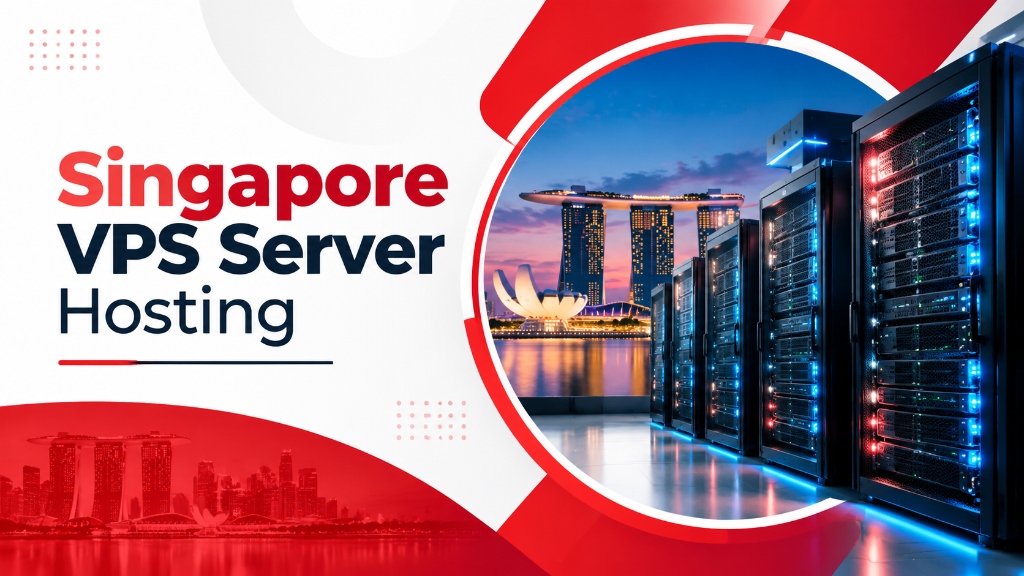
Singapore VPS hosting delivers dedicated KVM compute resources housed in tier-3 Singapore data centers, interconnected directly via SGIX and Equinix SG. Engineered for startups, digital agencies, and eCommerce portals targeting Southeast Asian audiences, it provides ultra-fast NVMe storage, dedicated vCPU allocations, and sub-15ms regional response times.
- Kernel-Level KVM Virtualization: Guaranteed hardware resources with zero overselling ensure consistent application responsiveness.
- Enterprise NVMe Storage: Rapid disk I/O accelerates database-driven web platforms, Node.js runtimes, and PHP execution.
- Strategic Regional Peering: Direct interconnects provide lightning-fast routing across Singapore, Malaysia, and Indonesia.
- Scalable Cloud Provisioning: Upgrade vCPU, memory, and storage instantly as user traffic and processing demands increase.
Targeting users across Southeast Asia demands a low-latency cloud hosting footprint in Singapore’s world-class data centers. Our Singapore KVM VPS servers combine the dedicated performance and root control of private servers with the cost-efficiency and instant scalability of cloud virtualization. Backed by high-speed NVMe arrays and resilient network routing, your applications benefit from responsive load times and high availability. For organizations scaling high-throughput compute workloads, our Singapore VPS server hosting solutions provides dedicated unmetered performance and enterprise hardware isolation.
Singapore operates as the premier financial and telecommunications hub connecting Southeast Asia with global cloud backbones. Interconnecting directly with the Singapore Internet Exchange (SGIX) provides low-latency optical peering with major regional telecommunications operators including Singtel, StarHub, Tata Communications, and NTT. Selecting specialized vps hosting in this environment guarantees predictable compute throughput, unshared physical resources, and full compliance with Singapore Personal Data Protection Act (PDPA) standards. When selecting a server administration interface, review our comprehensive Plesk vs cPanel control panel guide.
Our virtualization platform is built upon pure Kernel-based Virtual Machine (KVM) technology. In contrast to legacy container virtualization platforms where multiple tenants share a single operating system kernel and memory space, KVM delivers complete hardware-level virtualization. Each virtual instance operates with dedicated virtual CPU scheduling, private DDR5 ECC memory channels, independent virtual storage controllers, and isolated network interfaces, ensuring total privacy and consistent performance for production workloads.
Datacenter Architecture, Network Peering, and Carrier Connectivity
Datacenter infrastructure quality directly impacts application uptime and packet delivery. Our facilities in Singapore are engineered with N+1 concurrent maintainability across all electrical distribution paths, uninterruptible power supply (UPS) banks, and dual diesel backup generators with 72-hour onsite fuel reserves. Precision computer room air conditioning (CRAC) units maintain strict ambient temperature and relative humidity levels inside server halls, protecting physical server components from thermal stress.
The network backbone utilizes multi-homed BGP4 routing protocols connected to multiple Tier-1 upstream transit providers alongside direct peering at Singapore Internet Exchange (SGIX). The table below illustrates network routing metrics from our datacenter facility across regional and international markets:
| Destination Market / City | Network Interconnect | Average Round-Trip Latency | Transit Route Diversity |
|---|---|---|---|
| Singapore Metropolitan Area | Direct SGIX Peering Port | 1 – 2 ms | Dual Diverse Optical Rings |
| Kuala Lumpur, Malaysia | Cross-Border Terrestrial Fiber | 6 – 9 ms | Redundant Cross-Border Links |
| Jakarta, Indonesia | Direct Subsea Optical Cable | 12 – 16 ms | Multiple Subsea Cable Systems |
| Bangkok, Thailand | Cross-Border Subsea / Terrestrial | 24 – 30 ms | High-Priority Dedicated Routes |
| Hong Kong SAR | South China Sea Subsea Cables | 28 – 34 ms | Diverse Subsea Cable Systems |
| Tokyo, Japan | Trans-Asian Subsea Express | 58 – 66 ms | Multiple Subsea Route Diversity |
Automated upstream DDoS mitigation appliances filter volumetric attacks and protocol abuses before packets reach customer hypervisors. Combining inline scrubbing with low-latency peering ensures uninterrupted operation for payment gateways, corporate ERP systems, and e-commerce stores.
Hardware Virtualization: KVM Hypervisors and NVMe RAID-10 Storage
Modern web applications require sustained compute throughput rather than unpredictable shared bursts. Our host hypervisors run AMD EPYC 9004 series or Intel Xeon Scalable processors, backed by enterprise-grade DDR5 ECC registered memory channels. Every virtual processor core maps directly to physical hardware execution threads without oversubscription, ensuring predictable compute performance during peak business hours.
Disk storage relies exclusively on enterprise U.2 PCIe Gen4 NVMe solid-state storage media configured in redundant hardware RAID-10 arrays. This design delivers over 7,000 MB/s sequential read and write speeds alongside random 4K read throughput exceeding 900,000 IOPS. Database transactions, catalog searches, and cache writes complete with microsecond response times, avoiding the I/O wait bottlenecks typical of legacy SATA or SAS solid-state drives.
Organizations managing massive monolithic databases, custom private cloud hypervisors, or dedicated compliance clusters can also deploy our bare-metal dedicated server infrastructure, creating high-bandwidth private network tunnels between virtual machines and bare-metal nodes.
Full Root Administrative Control, Linux OS Images, and Custom Environments
Every virtual server includes unrestricted root administrative access for Linux operating systems or full administrative access for Windows Server installations. System administrators retain complete authority to customize kernel configurations, deploy private VPN gateways, install microservice containers, and configure reverse proxies without artificial host constraints.
We provide instant automated provisioning for popular enterprise operating system distributions, including Ubuntu 22.04 LTS, Ubuntu 24.04 LTS, Debian 12 Bookworm, AlmaLinux 9, Rocky Linux 9, and Windows Server 2022 Datacenter Edition. Administrators can also upload custom ISO files via the cloud control portal to install specialized distributions or custom firewall software such as pfSense or OPNsense.
Developers who need simplified website management can bundle graphical control panels including cPanel/WHM, Plesk Obsidian, or open-source solutions like CyberPanel and CloudPanel. For basic web hosting workloads that do not require independent root administrative rights, exploring our managed web hosting options provides an efficient, ready-to-use alternative.
Server Security Hardening, Firewall Rules, and Automated Maintenance
Operating public-facing servers requires proactive security hardening from the moment of initial installation. Below is an automated Bash deployment script illustrating standard server hardening protocols for Ubuntu and Debian instances:
Configuring key-based SSH authentication, disabling password-based login attempts, and implementing active Fail2ban intrusion filtering blocks brute-force authentication attacks before they consume server resources.
Optimizing Nginx, PHP-FPM, and MariaDB for High-Traffic Workloads
Online commerce platforms and content portals frequently experience concentrated traffic surges during promotional campaigns. Tuning the software stack ensures that server hardware handles incoming requests without memory saturation or connection queue drops.
Below is a production Nginx configuration snippet optimized for low latency and high concurrency on KVM virtual instances:
Implementing FastCGI microcaching offloads repeated page views from PHP-FPM and MariaDB, serving static HTML directly from RAM and preserving compute capacity for dynamic checkout transactions. To achieve balanced multi-instance agility and cost efficiency, pair your deployment with Singapore dedicated server hosting infrastructure featuring high-speed NVMe storage arrays.
Linux Kernel Tuning for High Network Throughput
Default Linux kernel network parameters are conservative and oriented toward general-purpose desktop environments. Applying network socket adjustments inside /etc/sysctl.d/99-networking.conf prepares your virtual server for high-throughput traffic:
Executing sysctl --system applies these parameters immediately. Expanding the local port range and enabling TCP socket reuse prevents socket exhaustion when backend proxies handle millions of microservice API calls.
Hosting Architecture Comparison: Shared Hosting vs KVM VPS vs Dedicated Hardware
Selecting the appropriate hosting model depends upon traffic volumes, data privacy regulations, and administrative requirements. The comparison table below highlights critical differences across our hosting platforms:
| Architectural Dimension | Shared Web Hosting | Dedicated KVM VPS | Bare-Metal Dedicated Server |
|---|---|---|---|
| Hardware Allocation | Shared Pool (Variable) | Dedicated vCPU & DDR5 RAM | 100% Dedicated Physical Rig |
| Hypervisor Isolation | Shared OS Kernel | Hardware-Level KVM Hypervisor | No Hypervisor Overhead |
| Storage Performance | Shared SATA/SAS SSD | PCIe Gen4 NVMe RAID-10 | Custom Multi-Drive NVMe Arrays |
| Administrative Access | Control Panel Only | Unrestricted Root / Admin | Full IPMI / KVM Hardware Access |
| Internet Exchange Peering | Standard Shared Transit | Direct Exchange Port Access | Dedicated 10Gbps Uplink Port |
| Regulatory Compliance | Standard Privacy | Full Isolated Privacy Sandbox | Dedicated Enterprise Compliance |
Containerized Microservice Architecture: Docker and Kubernetes on KVM
Modern application architectures in Singapore increasingly deploy containerized microservices to achieve rapid software release cycles. Deploying Docker and lightweight Kubernetes distributions such as K3s directly on our KVM instances combines hardware-level kernel isolation with container operational agility.
Every container communicates across a private internal bridge network, isolating private application services from public network interfaces while maintaining high throughput. Systemd integration ensures that containerized services restart automatically following host maintenance or kernel updates.
Regional High Availability and Low-Latency BGP Routing
Operating digital platforms in Singapore provides immediate low-latency connectivity across regional business corridors. Direct cross-connects to Singapore Internet Exchange (SGIX) allow virtual machines to peer with leading regional ISPs, enterprise backbones, and cloud CDNs over direct optical circuits, eliminating intermediary network transit delays.
Hardware-assisted TLS 1.3 cryptographic acceleration processes secure HTTPS transactions with minimal CPU load, delivering rapid page loads for high-concurrency e-commerce portals and business systems.
Dedicated private VLANs isolate replication traffic from public network transit, safeguarding sensitive internal communications against external observation.
To preserve high service reliability, automated network route health checks continuously poll upstream BGP links every 200 milliseconds. If latency spikes or upstream link degradation is detected along any transit path, internal core switches automatically steer egress traffic across redundant optical fiber carriers without dropped TCP sessions or renegotiated SSL connections.
In addition, localized Anycast IP configurations distribute incoming user traffic across nearest geographic points of presence, ensuring that global API clients and distributed mobile visitors experience consistent response times.
Proactive Capacity Planning and Continuous Performance Telemetry
Enterprise system reliability requires continuous insight into server performance metrics. By deploying modern telemetry collectors such as Prometheus Node Exporter and Grafana dashboards, engineering teams can track processor steal time, memory page fault frequencies, storage queue depths, and network retransmission rates in real time.
Establishing automated threshold alerts notifies systems engineers before resource saturation occurs, allowing straightforward vertical scaling of CPU, RAM, or NVMe storage capacity with minimal administrative effort.
Automated Snapshot Management and Disaster Recovery Protocols
Data resilience is vital for production continuity. Our virtualization management platform includes automated block-level snapshot capabilities that operate independently of the guest operating system. Incremental snapshots capture modified storage blocks on an automated schedule, transmitting encrypted disk images across isolated private networks to off-site backup storage repositories.
In the event of accidental file deletion, corrupted software updates, or database integrity failures, administrators can restore entire virtual disk states or individual file systems through our central management console. These recovery procedures execute rapidly without requiring manual support intervention, ensuring dependable business continuity for mission-critical applications.
Complementing local hypervisor snapshots, scheduled offsite backups replicate compressed disk images to geographically isolated secondary data repositories via encrypted WireGuard tunnels. This secondary storage policy provides immutable backup archives that safeguard critical business records against site-wide operational anomalies or unexpected data loss scenarios.
Periodic disaster recovery simulations enable engineering teams to verify data integrity and recovery speed under controlled conditions, ensuring that restore procedures remain dependable during real-world recovery operations.
Frequently Asked Questions
Q: Where is your virtual server hosting infrastructure physically deployed?
Q: What are the latency benefits of hosting in this datacenter location?
Q: Do I receive full root administrative access to my virtual server?
Q: What storage technology powers your virtual private servers?
Q: Can I scale my compute resources as my traffic increases?
Infrastructure Decision Framework: Choosing Your Deployment
Balancing low latency transit, dedicated hardware isolation, and predictable operating costs ensures long-term performance stability for enterprise applications.
Deploy high-performance scalable VPS hosting solutions equipped with enterprise NVMe storage arrays, redundant network uplinks, and 24/7 expert engineering support from Onlive Infotech. For streamlined domain management and server configuration across multi-tenant environments, refer to our comprehensive Plesk vs cPanel hosting control panel guide.
 ✓
✓
